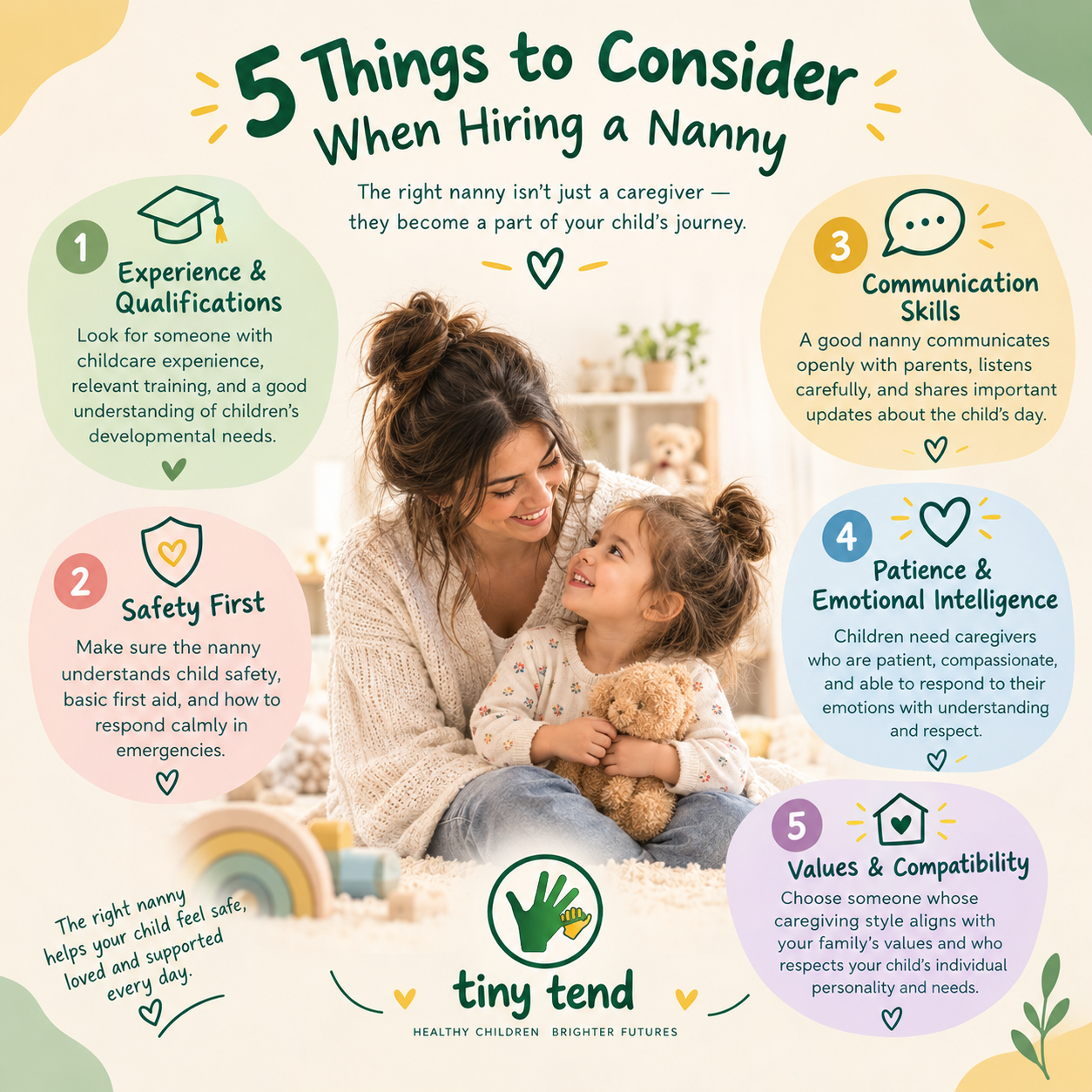
The families who get the most from their childcare arrangements are those who invest in the relationship. Small habits make a big difference.
A great babysitter or nanny can become one of the most important people in your child's life — and in yours. But that kind of trust is built deliberately, not by chance.
Write a short house guide: where things are kept, your child's routine, food allergies, screen-time rules, emergency contacts. Spending 20 minutes on this saves dozens of awkward conversations later.
Check in after the first week. Ask what went well and what was confusing. Positive feedback is as important as corrections: it tells your caregiver what you value, and people do more of what gets noticed.
Consistent late returns are one of the top reasons good caregivers leave families. If you're running late, message ahead. If it becomes a pattern, add a late fee to your agreement — it changes behaviour without hard conversations.
When your child takes their first steps or says a new word, tell your caregiver. These shared celebrations build real connection and remind everyone why the work matters.
At least once a year, sit down for a proper conversation: what's working, what's changed, whether a pay increase is appropriate. Caregivers who feel valued — financially and personally — stay longer. Continuity is worth a lot to children.
The relationship is a two-way investment. The families who treat it that way almost always describe their childcare experience positively.
More articles
View all →